One in four U.S. adults lives with a disability. Many of them already work on your teams, buy from your company, or will apply for your next open role. Yet disability is still the part of inclusion that most organizations talk about least. A disability inclusion keynote speaker can change that in a single session, but only if you pick the right one and plan beyond the day itself.
This guide walks event planners, HR leaders, and ERG chairs through what a strong disability inclusion keynote delivers, the themes that matter in 2027, how to vet speakers, what to budget, and how to turn one hour on stage into lasting change.
What Is a Disability Inclusion Keynote Speaker?
A disability inclusion keynote speaker is a professional speaker who helps organizations understand disability as part of diversity, remove barriers to belonging, and build cultures where people with visible and invisible disabilities can do their best work. The best ones combine lived experience with practical tools that leaders and teams can use the next morning.
This is different from a general motivational talk. A motivational speaker might tell an inspiring story about overcoming the odds. A disability inclusion speaker uses that story to reframe how the audience thinks about ability, then gives them specific behaviors, language, and systems to change. The goal is not pity or applause. The goal is action.
Why Disability Inclusion Belongs on Your Main Stage in 2027
Many companies have made real progress on gender and racial equity, but disability often sits at the edge of the conversation. The numbers show why that gap is costly:
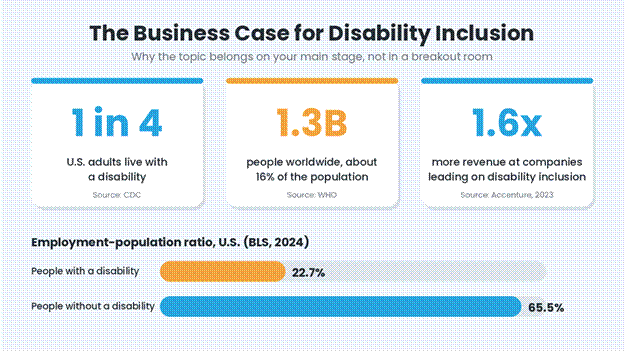
- It affects a huge share of your people. The CDC reports that about 1 in 4 U.S. adults has a disability, and the World Health Organization estimates 1.3 billion people worldwide, roughly 16% of the global population.
- Most disabilities are invisible. Chronic illness, autoimmune conditions, neurodivergence, hearing loss, and mental health conditions are rarely obvious. Many employees never disclose because they fear being seen as less capable.
- It drives performance. Accenture’s 2023 research with Disability:IN found that companies leading on disability inclusion generated 1.6 times more revenue than their peers.
- The talent gap is real. U.S. Bureau of Labor Statistics data for 2024 shows an employment-population ratio of 22.7% for people with a disability, compared with 65.5% for people without one. That is a large, skilled talent pool most employers are missing.
Put simply, disability inclusion is not a side topic. It is a leadership, retention, and growth topic, and it deserves a main-stage moment.
What a Great Disability Inclusion Keynote Delivers
1. Lived experience that builds trust
Audiences can tell the difference between someone who has studied disability and someone who has lived it. A speaker with lived experience earns trust quickly and gives employees with disabilities a rare moment of being seen on a main stage, often in front of their own executives.
2. A reframe from limitation to advantage
The strongest sessions shift the frame. Instead of treating disability as something to accommodate quietly, they show how adapting to limits builds creativity, problem-solving, and resilience. Those are the same skills every organization needs during constant change.
3. Practical tools, not just inspiration
Look for a keynote that leaves people with specific actions: inclusive language, how to ask about accommodations without awkwardness, how to design accessible meetings, and how managers can make disclosure feel safe.
4. A clear framework people remember
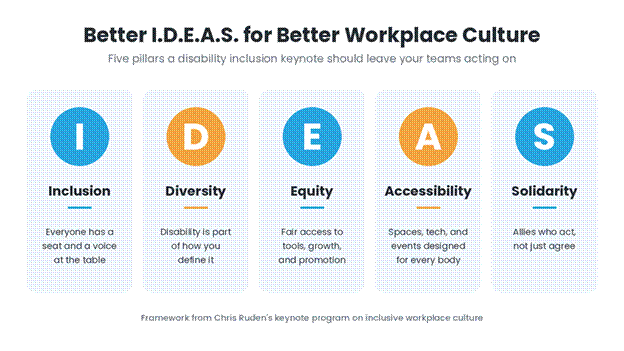
A memorable framework helps ideas stick after the event. Chris Ruden’s program Better I.D.E.A.S. for Better Workplace Culture organizes the conversation around five pillars that teams can return to in planning meetings and ERG discussions.
Disability Inclusion Keynote Themes That Resonate in 2027
- Invisible disabilities and psychological safety: creating cultures where people can disclose without risk, and where managers respond with support instead of suspicion.
- Accessibility as innovation: how designing for disability, from captions to voice tools, leads to better products and services for every customer.
- Inclusive leadership habits: small daily behaviors that signal belonging, from meeting design to how feedback is given.
- Disability in hybrid and AI-enabled workplaces: making sure new tools and remote setups widen access instead of creating new barriers.
- Allyship that acts: moving from awareness months and posters to solidarity that shows up in policy, hiring, and promotion.
How to Choose the Right Disability Inclusion Keynote Speaker
Use these questions when you shortlist speakers:
- Do they have lived experience? Personal experience with disability brings credibility that research alone cannot.
- Can they connect disability to business results? Your executives will listen more closely when inclusion is tied to retention, innovation, and performance.
- Will they customize? Ask how they tailor content to your industry, your employee survey results, and your current inclusion goals.
- Is their message hopeful without being pity-driven? Avoid talks that frame disability as tragedy. The best speakers leave audiences energized and equipped.
- Do they offer follow-through? Workshops, leadership sessions, books, or virtual follow-ups help the message last.
- Can you see them in action? Watch full-length video, not just a highlight reel, and ask for references from planners in your industry.
What Does a Disability Inclusion Keynote Speaker Cost?
Fees vary with the speaker’s profile, event format, location, and how much customization you need. As a general guide:
- Emerging speakers: often a few thousand dollars per keynote.
- Established professional speakers: commonly in the mid four to low five figures for an in-person keynote.
- Celebrity or high-profile speakers: can reach well into five or six figures.
Virtual keynotes usually cost less than in-person sessions. Packages that add a workshop, leadership breakout, or books for attendees often deliver better value than a stand-alone talk. Always confirm what is included, such as pre-event calls, customization, and travel.
How to Turn One Keynote Into Lasting Inclusion
Before the event
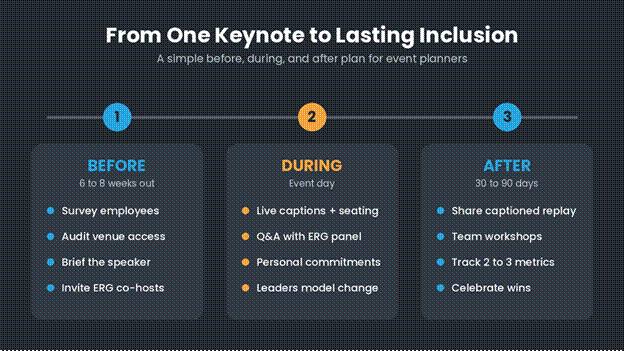
Run a short anonymous survey on belonging and accessibility, and share the results with your speaker. Audit your venue and virtual platform for access, including ramps, seating, captions, and screen-reader friendly materials. Invite your disability ERG to help shape the session.
During the event
Model what you are teaching: provide live captions, accessible seating, and materials in multiple formats. Pair the keynote with a short Q&A or ERG panel, and ask each attendee to write down one specific commitment.
After the event
Share a captioned recording, schedule team-level follow-up sessions, and pick two or three measurable goals, such as accommodation request turnaround time or self-identification rates. Report back on progress so employees see that the keynote was the start of something, not the end.
Why Event Planners Book Chris Ruden as a Disability Inclusion Keynote Speaker
Chris Ruden was born with a limb difference and later diagnosed with an autoimmune disease. For years he hid both. Learning to turn them into strengths changed his life, and today he helps organizations do the same with their people.
Chris is a world-record-holding powerlifter, a competitor on Season 1 of NBC’s Titan Games with Dwayne “The Rock” Johnson, and the author of The Art of Changing Course: 3 Steps to Get Unstuck and Solve Your Real Problems. His keynotes blend lived experience, humor, and practical frameworks that leaders and teams can use right away.
Popular programs include:
- Better I.D.E.A.S. for Better Workplace Culture: Inclusion, Diversity, Equity, Accessibility, and Solidarity in action.
- Gaining the Upper Hand: transforming limitations into leadership advantages.
- Change Is Strength: building future-ready teams through transformational change.
Chris speaks at corporate events, conferences, ERG summits, and all-hands meetings, in person and virtually. If you are planning a Disability Employment Awareness Month event, an inclusion summit, or a leadership offsite, reach out through the contact page to check availability.
Frequently Asked Questions About Disability Inclusion Keynote Speakers
What does a disability inclusion keynote speaker talk about?
They cover how to include people with visible and invisible disabilities, accessibility, inclusive leadership habits, psychological safety, and the business case for disability inclusion, usually anchored in personal experience.
When is the best time to book a disability inclusion keynote?
Many organizations book around National Disability Employment Awareness Month in October or Global Accessibility Awareness Day in May, but the message works year-round for kickoffs, leadership retreats, and DEI summits. Book three to six months ahead for the best availability.
How long is a typical disability inclusion keynote?
Most keynotes run 45 to 60 minutes, often with 10 to 15 minutes of Q&A. Half-day workshops are a good add-on for managers and ERG leaders.
Can a disability inclusion keynote be delivered virtually?
Yes. Virtual keynotes work well for distributed teams, as long as you provide live captions, accessible slides, and an interactive Q&A.
How is this different from a general DEI keynote?
A general DEI keynote covers many dimensions of diversity. A disability inclusion keynote goes deep on the dimension most organizations overlook, with specific tools for accessibility, accommodations, and disclosure.
Ready to Make Inclusion Real?
The right disability inclusion keynote speaker does more than raise awareness. They change how people see ability, give leaders tools to act, and help every employee feel they belong. Contact Chris Ruden’s team to bring a keynote to your next event that your people will talk about long after the lights go down.